Tuesday, February 15, 2011

Heirs apparent and regents of the Hojo clan

This is the list of sixteen regents of the Kamakura government. All of them were of the Hojo clan. R stands for regent and H stands for heir apparent. Tokiuji was the only heir apparent who didn't become a regent because he passed away before his father Yasutoki did.


R1.Tokimasa(1203-1205)
H1R2.Yoshitoki (1205-1224)H2
R3.Yasutoki (1224-1242)H3
****Joraku-ji---.Tokiuji - H4R4.Tsunetoki (1242-1246)H5 ***Komyo-jR5.Tokiyori (1246-1256)H6 *****Kencho-ji , Meigetsu-in R6.Nagatoki(1256-1264) *******Jokomyo-jiR7.Masamura (1264-1268)
R8.Tokimune (1268-1284)H7 ***
Engaku-jiR9.Sadatoki (1284-1301)H8 *****Kakuon-jiR10.Morotoki (1301-1311) *******Jochi-jiR11.Munenobu(1311-1312)
R12.Hirotoki (1312-1315)
R13.Mototoki (1315-1316)
R14.Takatoki (1316-1326)
H9R15.Sadaaki (11days)
R16.Moritoki(1326-1333)

Monday, February 14, 2011

The fall of Yoritomo and the rise of the Hojo clan

Yoritomo passed away in 1199 when he was 53 years old. It is said that he fell off a horse that triggered his death. But there are some other theories such as assassination. Anyway it is very strange that the cause of death of such an important person is obscure. Personally I doubt that Tokimasa Hojo plotted Yoritomo's death. His elder son Yoriie succeeded Yoritomo when he was 18.The young Shogun was an iconoclast and neglected Yoritomo's vassals. So, Tokimasa set up a council system of 13 vassals to stop Yoriie's autocracy three months after his succession to the shogunate. Kagetoki Kajiwara and Yoshikazu Hiki who were supporters of Yoriie among vassals were killed in 1200 and 1203 respectively and Yoshiie was detained in a monastery of Shuzen-ji Temple in Izu.In 1204 Yoriie was killed. After Yoshiie was ousted to Izu, Sanetomo who was the younger son of Yoritomo became Shogun at the age of 12. Finally Tokimasa became the first regent and assume control of the Kamakura government. There was another tragedy for Yoritomo family. In 1219 Sanetomo was assassinated by his nephew Kugyo who was Yoriie's son and Kugyo was killed soon after the assassination. At this moment Yoritomo lost all of his heirs apparent.
Yorotomo's grave is to the east of Tsurugaoka Hachimangu Shrine.Kagetoki Kajiwara's grave is at a strange site. Get off an Ofuna monorail train at Shonan-Fukazawa station. Within five minutes' walk you will arrive at Fukazawa Elementary School. Ask a security guard to open the gate and you will know where it is if you ask him politely. It is at the back of a school building.
Yoshikazu Hiki and his family's memorial site is Myohon-ji Temple.

Sunday, February 13, 2011

Yoritomo and Masako

Yoritomo Minamoto (at Genji-yama park)
The founder of the Kamakura government is Yoritomo(1147-1199). His family name is Minamoto. In Japan we call him Minamoto no Yoritomo, but I follow the western rule and call him Yoritomo Minamoto or simply Yoritomo. In the Nara era (710-794) and the early Heian era many of the Imperial family members were given family names such as Taira and Minamoto and became aristocrats. Yoritomo is the offspring of the 56th Emperor Seiwa.
Masako Hojo (at Anyo-in Temple)
When he was in exile to the Isu-peninsula under the surveilance of Tokimasa Hojo(1138-1215), a powerful family there, Yoritomo fell in love with Tokimasa's daughter Masako(1157-1225) and got married to her. Yoritomo had a half brother Yoshitsune whose saga is very famous in Japan. Yoshitsune defeated their rival Taira clan at the battle of Dannoura. With the help of Tokimasa, Yoritomo became the first Shogun in 1192 while Yoshitsune was plotted, exiled to the far north and finally killed.


Wednesday, February 9, 2011

SEE NO EVIL, HEAR NO EVIL, SPEAK NO EVIL

When I walked around the north-west Kamakura area, I came across the scalpture of three monkeys. Where did I see it? It is my secret. But I will give you a hint. Walk around a Jodoshinshu temple in Kamakura, and you will find it.

It was between the temple and a shrine named Itsukushima Shrine. Which Jodoshinshu shrine? Don't worry. There is only one in Kamakura.


Monday, February 7, 2011

Bean-Throwing Ceremony at Kencho-ji Temple

Mamemaki On February 3, '11, I visited Kencho-ji Temple which has been designated as the first ranked zen temple among five prestigious zen temples in Kamakura. I went there to see the bean throwing ceremony-mamemaki. Before the ceremony I enjoyed watching kappore dance in the precinct of the temple. Dancers, men and women in their fifties or more, were dancing happily with the music of shamisen players. Shamisen is a three stringed Japanese musical instrument played with a pick. In the Edo period people enjoyed Kappore dance; kappore became very popular in the Meiji era. As it was announced, the bean throwing ceremony began around noon. Kencho-ji priests, Miss Kamakura beauties and men/women born in the Chinese zodiac year of a rabbit threw packages of beans to the crowds.

I was lucky enough to catch three packages.


Friday, January 28, 2011

New Year's Resolution


I was busy in translating Japanese articles of incorporation into English this month. So, this is my first contribution to this blog.My resolution of this year is very simple. That is to show the wonder of Kamakura, Yokohama and Tokyo to as many foreign tourists as possible. At the same time I'd introduce historic sites in my blog.
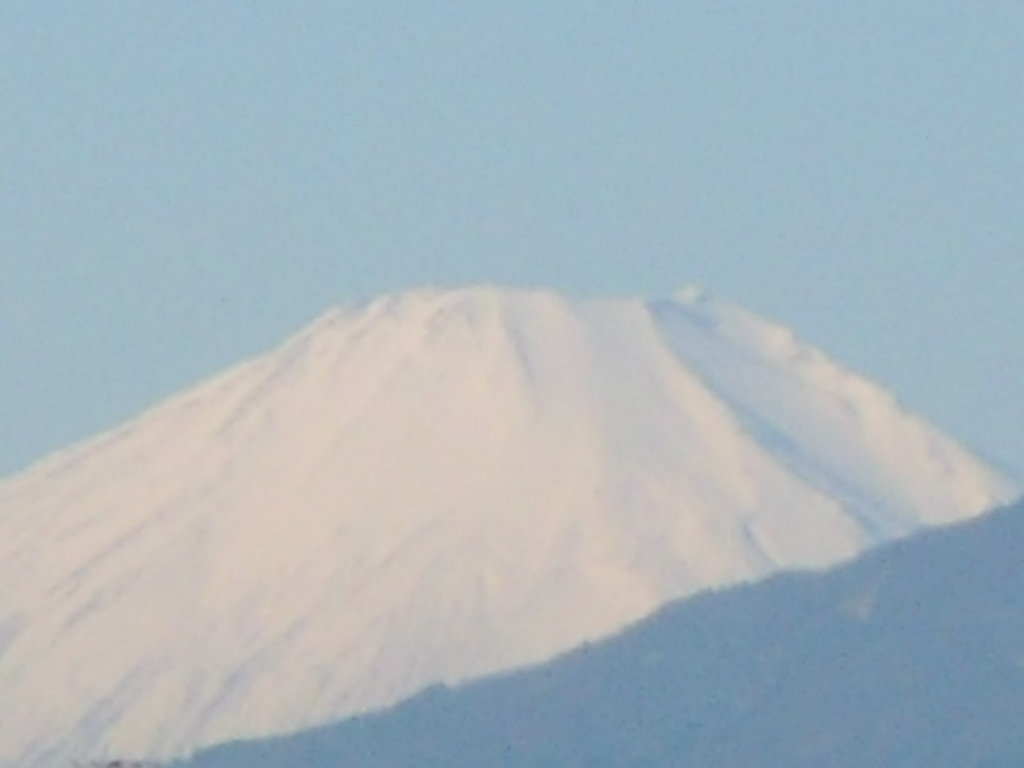
I took a picture of Mt. Fuji in my yard and enlarged it. I am very happy when the sky is clear. I hope fortune smile on you this year again.
 

Monday, December 27, 2010

With an American tourist in Yokohama, Kamakura and Tokyo

I spent four days and a half with an American tourist, Mr. Bruce Lieber. He came to Japan on purpose which I will explain later and I have his permission to write about his trip on my blog and call him Bruce.
Dec.17,2010(Fri) is the first day for me to take care of him. We went to three buildings nicknamed King(Kanagawa Municipal Hall), Queen(Yokohama Customs Office) and Jack which are all in the Kannai area.This picture was taken in the Yokohama Port Opening Memorial Museum aka Jack.
Then we walked through Yamashita park and had lunch on the first floor of Marine Tower. After lunch we saw the monuments of James Curtis Hepburn and Eliza R. Scidmore and went up to America-yama Park by elevator. We saw Yokohama Foreign General Cemetary, Harbor View Park and walked down to China Town. We looked into a mausoleum 'Kantei-byo' which is a Chinese shrine. A Chinese war lord around 160 AD was apotheosized and most of the China towns have Kantei-byo. When we went out its gate, we saw Joseph Heco's monument. He was the first Japanese American who worked for the American consulate in Yokohama. We looked for a souvenir shop of Yokohama Baystars and finally found one in front of Kannai station.
We walked in Yokohama all day, so I thought Bruce was tired a little bit. But he said there was no problem. He went to Okinawa the next day and spent four days there with a British journalist.It was his main purpose to go to Koza,Okinawa. If you read the Ryukyu Shimpo dated Dec.20,2010(Mon), you already knew of him. That day was the 40th anniversary of the Koza Riot.
I won't write about the Koza Riot here because you will learn it soon in the near future in an article of The Japan Times'.
Bruce came back to Yokohama and went to Kamakura with me. On Dec.22 we visited Kotoku-in Temple, Hase-dera Temple,Zeniarai-benten Shrine, Hokoku-ji Temple and Tsurogaoka-hachimanngu Shrine.Bruce seemed to be impressed by the Great Buddha at Kotoku-in Temple.


The picture below was taken in the precinct of Hase-dera Temple by a kind gentleman spontaneously.


At a noodle restaurant 'Kishimen' we had lunch and the master who can speak English well took this photo.
When we were walking around the crossing of the Hase area, a tall western man and a cool lady asked me how to get to Hase station. I replied ,' Go straight this way. You'll never miss the station.' Then Bruce asked him, 'Where have you come from?' The man replied, 'DC.'
On the way back to his hotel we stopped by Noh theater in Yokohama. We were lucky that we could enter and take a picture.


On Dec.23 we went to the Imperial Palace to see the celebration of the Emperor's Birthday. It was holy and impressive. There were many foreign tourists. Among them I saw a group of westerners who were taking pictures by themselves. So, I said to a man in the group that I would take the picture of the whole family with his camera. He passed me his camera and then three other women passed us their cameras. Bruce and I took thier pictures with those cameras. In return he took our pictures with my camera and that of Bruce.
Bruce asked them where they came from and then a young girl replied ,'Brisbane, Australia'After this we went to Ginza and Hiroo before we went back to Yokohama.
On Dec.24 we went to Sankei-en Garden which is in the Honmoku area of Yokohama. We took a train of the JR Negishi line at Kannai station and got off at Negishi station.Then we took a bus and got off at Honmoku bus stop. It took only five minutes from the bus stop to the garden.

Sankei-en was a co-product of an entrepreneur and his adopted son.
Zenzaburo Hara founded his raw silk trading company in the Kannai area.
He was one of the most successful merchant in Yokohama from the end of the Edo to the early Meiji era. His granddaughter Yasu got married to a man who was a teacher of her high school. Zenzaburo adopted the man as his son.The man's name was Tomitaro Aoki. Aoki was his prenuptial name.
Zenzaburo who lived in a big house in the Nogeyama area bought the vast land here in Minotani which literally means three valleys.

Tomitaro Hara succeeded his adoptive father's business. He made use of the wealth and bought old buildings of temples and shrines. He dismantled them, brought them here and reconstructed them here. He was a haiku poet and enjoyed a tea-ceremony with his pseudonym Sankei which means three valleys. This garden was named after his psedonym.
After World War ⅡHara family abandoned to restore the garden and donated it to Yokohama city.

Yokohama city established Sankei-en Preservation Organization and repaired it with Yokohama citizens' tax. So, Yokohama citizens who are 65 years old and over are free of charge.I am one of them who can enter the garden for nothing.The organization collected some more buildings. Among them is a big farm house which was brought here from Shirakawa-go in Gifu Pref. which is one of the 14 world heritage sites of Japan. I like the farming house because I can enjoy the atmosphere of Shirakawa-go without going to Gifu.After enjoying the beautiful garden we went to a British pub near Sakuragicho station and had lunch. I ate fish and chips for the first time in my life. They were delicious! Then we went up to the observatory of the Landmark Tower. Bruce shouted 'Wow!'
On Dec.25 I saw Bruce off to YCAT at 12:30 pm.
I had a nice experience. Through this tour I learned a lot of things which I didn't know. Thank you, Bruce!