Wednesday, March 2, 2011

Kanazawa-bunko Museum and the exhibition of Unkei

Kanazawa-bunko Museum I went to Kanazawa-bunko Museum to see the special exhibition of Unkei(1151-1223), a well known sculptor in the late Heian and the early Kamakura era.
Among the sculptueres exhibited in the museum this time, the above is the only real national treasure 'Dainichi Buddha' which has been possessed by Enjo-ji Temple in Nara.

This is a wooden sculpture by Unkei which was designated as an important cultural property three years ago ' Daii-tokumyou King'.
・・・・・


Sanetoki Hojo

Sanetoki Hojo was a grandson of Yoshitoki Hojo who was the second regent of the Kamakura government. He established Kanazawa-bunko Museum where he collected many precious documents. He also built Shomyo-ji Temple which stands next door to the museum.
・・・・・


Shomyo-ji Temple

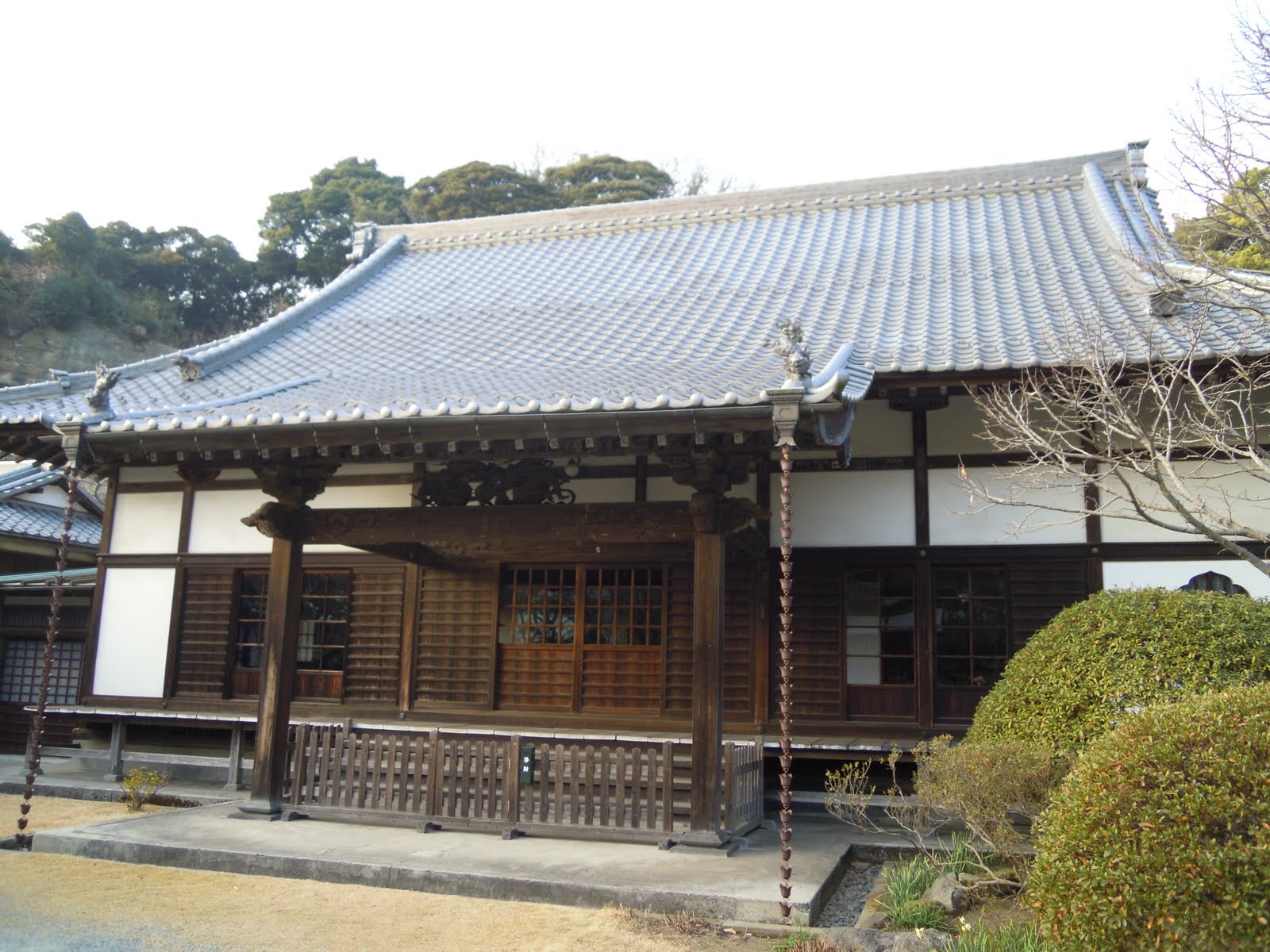
The main hall of Shomyo-ji Temple
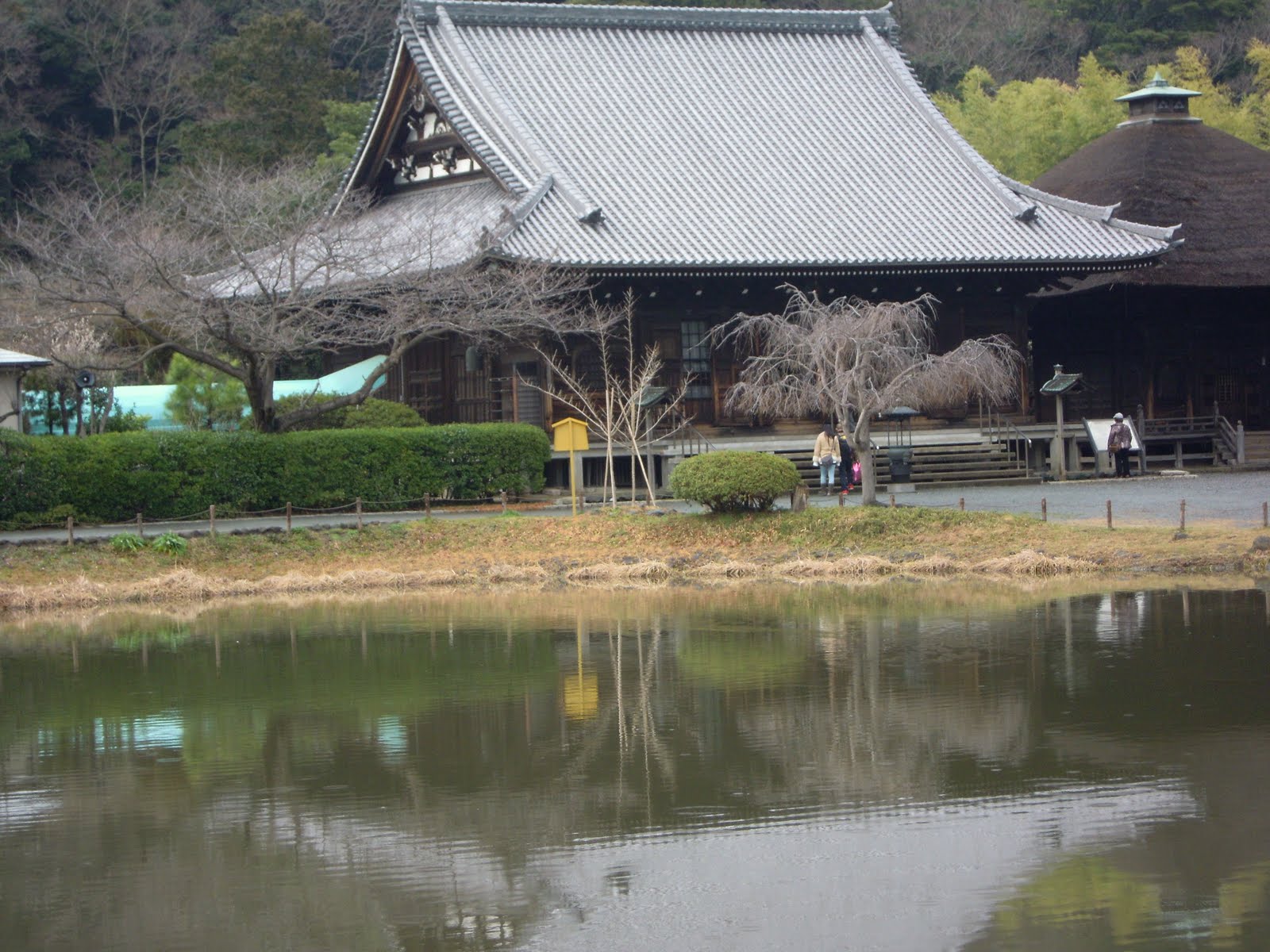
A beautiful picture of the bridge and its reflexion on the pond.
You can enjoy eight murals in the tunnel between the museum and the temple.
Kanazawa-bunko Museum and Shomyo-ji Temple are in Kanazawa-ward of Yokohama-city


Monday, February 28, 2011

Kosho-ji Temple


Ippen, the founder of the Jishu sect of Buddhism, was surrounded and thwarted by the then Regent Tokimune's group not to enter the center of Kamakura. So, Ippen camped out around this site.
The transom of the temple gate bears a cross crest that singifies the Christian cross. This temple is said to have accepted secret Chritians during the difficult time of the Edo period when Christianity was banned.
The Goddess of Mercy, Yugyo-kannon stands in the precinct of Kosho-ji Temple


Joraku-ji Temple

Joraku-ji is situated between Kita-kamakura and Ofuna stations. It was built by Yasutoki, the third regent of the Hojo clan 1237 and belongs to Rinzai sect of Buddhism. The main gate of Joraku-ji The explanation of Joraku-ji
The main hall of Joraku-ji
Joraku-ji literally means a temple where people always feel comfortable.


Thursday, February 24, 2011

KAMAKURA - Fact and Legend by Iso Mutsu

Here is a guide book of Kamakura written by a woman named Iso Mutsu(1867-1930). I was recommended to read this book by my adviser Johnny Buckle. Her precise depiction on Kamakura's temples and shrines is useful for me as a sightseeing tour guide in Kanakura.
Do you know anything about the author Iso Mutsu? If you are a Japanese, you may imagine this author was a member of Mutsu family.
Yes, she was. Then, why could she write such a detailed guide book of Kamakura in English? Was she a returnee from the USA or the UK?
No, she wasn't. She was a native speaker of English.
She got married to a son of Munemitsu Mutsu who was then the minister of foreign affairs. The son Hirokichi, while studying at Cambridge, fell in love with the landlord's daughter, Gertrude Ethel Passingham. There were many obstacles to their marriage, but they overcame the difficulties and finally got married in 1905. In 1910 she came to Japan for the second time and lived in Kamakura until her death.
In 1918 she wrote the classic guide 'Kamakura:Fact and Legend'.
She liked Japan and successfully apapted to this country, even giving English lessons to the members of the Imperial Family, among them Prince Chichibu, a brother of Showa Emperor.
After her death she was buried in the Mutsu family's yagura(cave-grave) in the Jufuku-ji Temple's graveyard.
Jufuku-ji Temple

Mutsu family's yagura(cave-grave)
 

Wednesday, February 23, 2011

My happy experience

I felt very happy when a foreigner whom I took care of sent me a letter with his compliment. What I did was nothing special. But I was very proud of what I had done to him.

Thursday, February 17, 2011

Kakuon-ji Temple


Kakuon-ji Temple was founded by the 9th regent Sadatoki Hojo in 1296 with the hope that another Mongolian invasion wouldn't happen again. During the 8th regency of Tokimune, Mongol tried to invade Japan twice in 1274 & 1281 with failure.In the precinct there is
a sacred hall 'Yakushi-do' which the second regent Yoshitoki built, who got a message from God. I am sorry that I could't show the picture, because it was prohibited from taking pictures in the inner precinct.
A stupa in the front yard
On the surface of the bell there are English words being inscribed.


Let's go and read them.
 

Wednesday, February 16, 2011

Jokomyo-ji Temple

Jokomyo-ji Temple was built in 1251 by the 6th regent Nagatoki Hojo. It is a beautiful temple which belongs to Shingon-sect.
What is different from other temples is that there is a statue of Yang Guifei. Do you know who Yang Guifei is and why her statue is here?