Friday, September 23, 2011

Sumo Wrestling

On September 22, I went to Tokyo to see sumo wrestling.  Sumo tournaments are held six times a year, fifteen days each. In January, May and September they are held in Tokyo. The other three are held in March in Nagoya, in July in Nagoya and in November in Fukuoka. The above picture is Sumo Gymnasium in Ruogoku, Tokyo. 
A sumo wrestler Okinoumi arrived at the gym for his bout today.
Wrestlers show up altogether in two groups; one from the east, the other from the west. Above wrestlers appeared from the east.
These wrestlers appeared from the west.
The grand champion Hakuho showed up and is about to step on the ring flanked by two subordinates.
The left wrestler(Takanoyama) is from the Czech Republic and the right one(Kyokutenho) is from Mongolia. Thus sumo wrestling has become international.
Today's final bout was between Hakuho(left) and Kisenosato(right). Hakuho lost.

After the final bout a bow dance was performed to celebrate the winner.
Written and posted by Mitsutoshi Masunari.

Tuesday, September 20, 2011

Horseback Archery at Samukawa-jinja Shrine

Horseback archery is called Yabusame in Japanese which is said to have started about 1,500 years ago. But the oldest description about it was found in a history book written in 1096 during the Heian Period.
I went to Samukawa-jinja Shrine with a British educator Johnny to see a horseback archery ceremory on September 19. It was a national holiday in Japan so there were full of people there. 
The course was 215 meter long and there were three targets on the same side. In the center of the picture there is a target which is the second one. The first round started with 10 archers who were given two chances respectively. 

In the Kamakura Period(1192-1333) Yoritomo Minamoto who was the founder of the Kamakura Government encouraged to practice horseback archery to enhance warrior's ability of archery.
Then, three smaller targets were prepared for the second round. For one target two plates made of pottery have been attached together. Between the plates confetto have been stuffed.  Five archers were eliminated and contested their skill at the second round.
An archer named Yoshitaka Tanaka won with his horse Heian.
Written and posted by Mitsutoshi Masunari.
Johnny at Samukawa-jinja Shrine


Thursday, September 8, 2011

Enyuu-ji Temple in Meguro Ward of Tokyo

Enyuu-ji Temple is a Tendai-sect temple. It was founded by Jikaku Daishi aka Ennin in 853 and was named as Hofuku-ji Temple. During the Kamakura Period it was converted to Nichiren-sect temple in 1283 and was renamed as Hokke-ji Temple. It had been Nichiren-sect temple for about 400 years until it was forced to close by the Tokugawa Government during the Edo Period because  Buddist priests of this temple neglected believers of other sects' Buddhism.
In 1698 it was converted to Tendai-sect temple again and restarted. In 1834 this temple was renamed as the current name Enyuu-ji Temple.

This is the main hall of Enyuu-ji Temple.

Between the entrance gate and the main hall there is another gate ' Niomon' in which a pair of statues of Nio stand on both side of the gate.


Thursday, August 11, 2011

Todoroki-fudoson Temple and Todoroki Ravine in Setagaya Ward of Tokyo

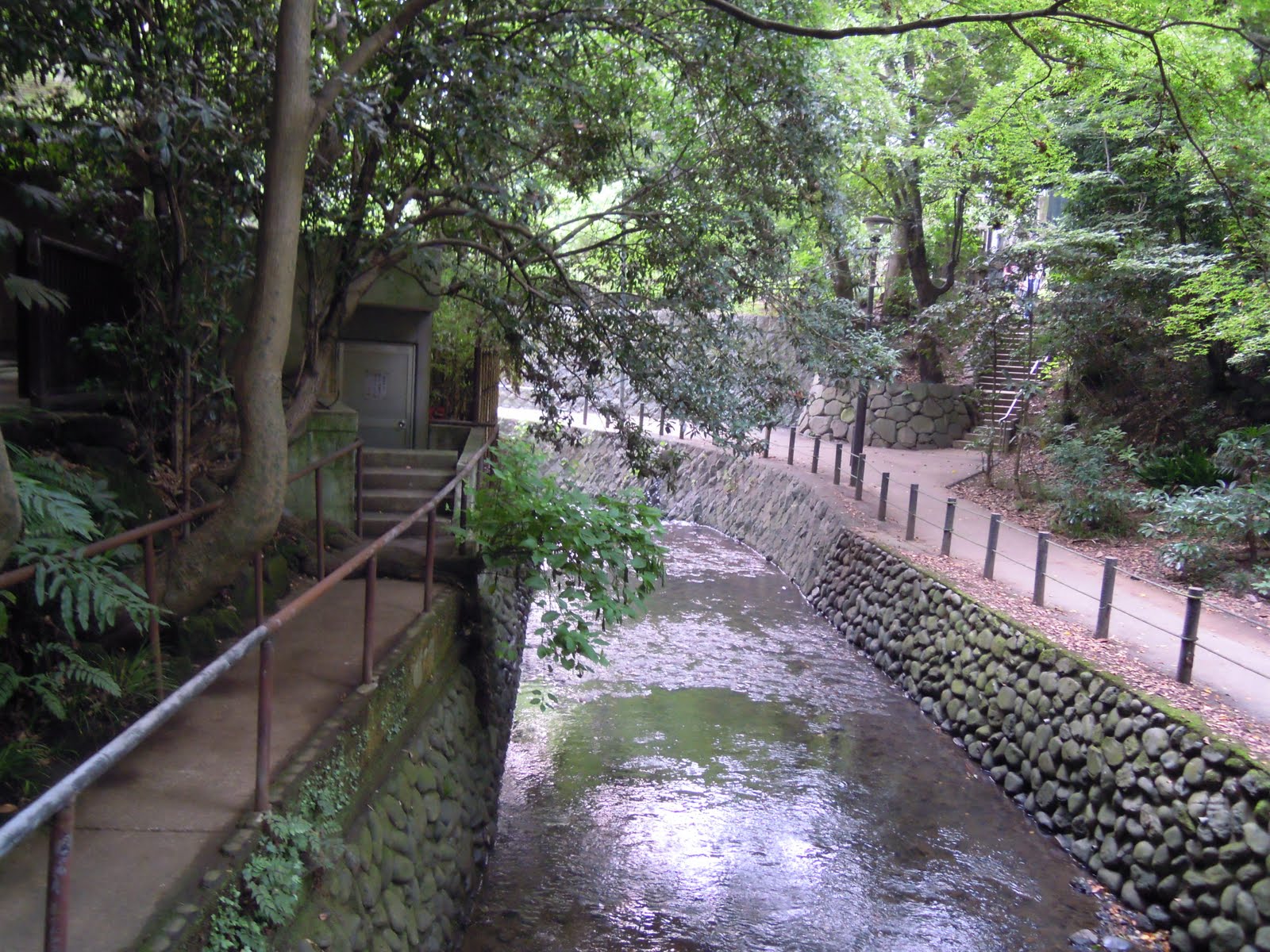
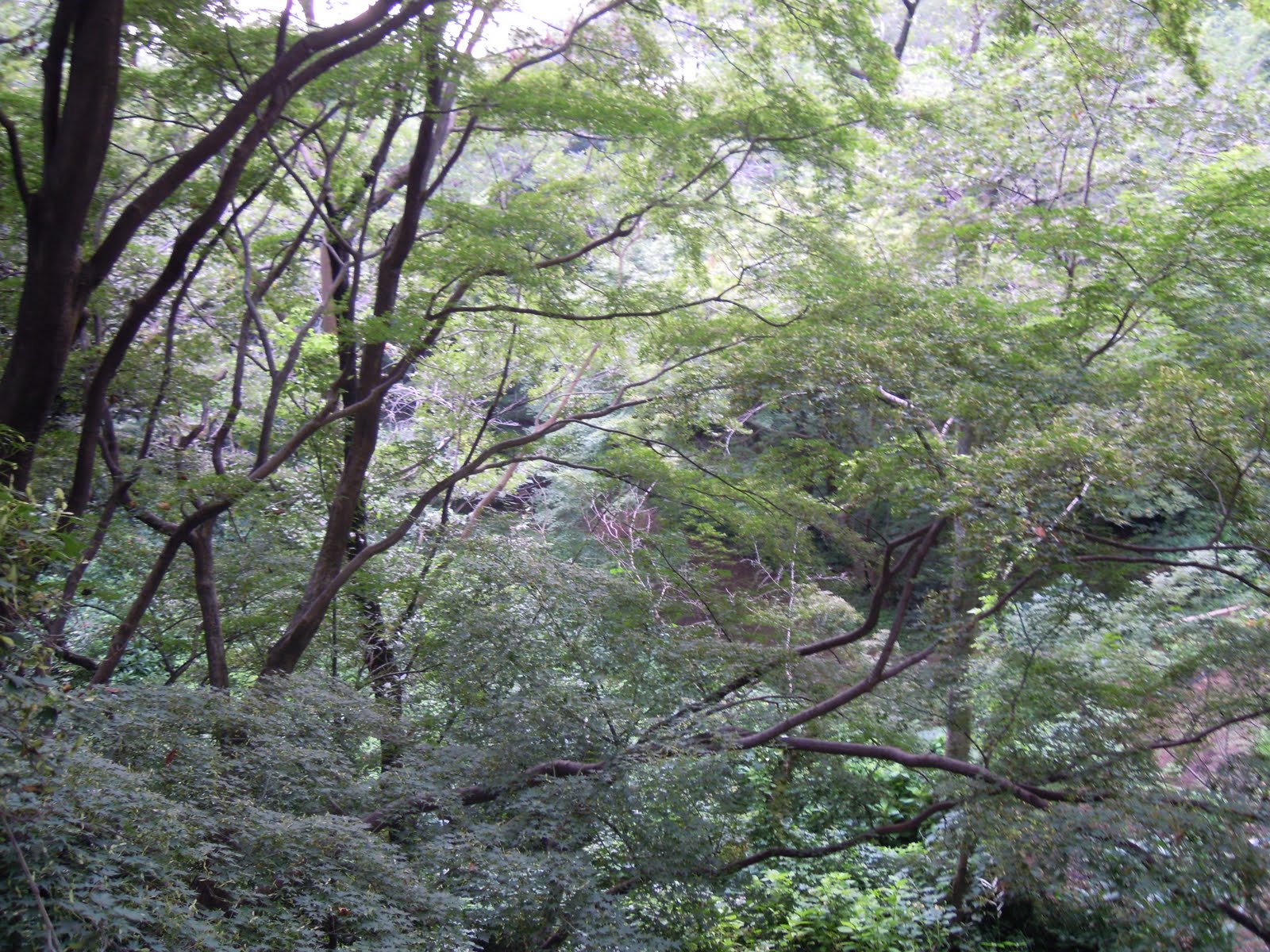
It is a bit of a surprise that there is a ravine in Setagaya Ward of Tokyo.
Todoroki is in the southern part of Setagaya Ward. Beyond this green corner there is a temple.
This is the main entrance of Todoroki-fudoson Temple.
The main hall of the temple

Cascades through a pair of dragons

A path through the forest

Todoroki Ravine

Benten pond and its bridge

Benten-do Hall beyond the bridge

The precinct of Todoroki-fudoson Temple

A beautiful scene from the observatory
 

Wednesday, August 10, 2011

Gotoku-ji Temple in Setagaya Ward of Tokyo

Gotoku-ji Temple is in Setagaya Ward of Tokyo. This temple was founded in 1480 and had been the main part of Setagaya Castle until it was dismantled in 1590. In 1633 Naotaka Ii who was the lord of Hikone Domain reclaimed this temple as Ii Family's temple.

This is the approach to Gotoku-ji Temple. I was surprised how holly it was!
This is the main entrance to Gotoku-ji Temple.
This is a Buddhist hall- so called butsuden- in which five statues of Buddha have been preserved. When Naotaka passed away, his daughter ordered a famous scalptor Shoun(1648-1710) to carve them.
This is the inner sight of butsuden.

This is another picture focused on the two statues on the right.

This is the main hall of Gotoku-ji Temple.

This is the inner sight of the main hall.

Gotoku-ji Temple is said to be the birth place of  a 'Maneki-neko' which literally means a 'Beckoning Cat' or  a 'Welcoming Cat'.The above picture shows a hall- Shobyo-den- in which cat dolls have been enshrined.
I bought this Welcoming Cat at Gotoku-ji Temple

Temple's office

A bell

A three storied pagoda

Around the wall of the pagoda there are scalptures of animals of the twelve signs of the Chinese zodiac.


Naosuke Ii's tomb stone
PS:
1. Naosuke Ii
Iis were lords of Hikone Domain and also vassals of Tokugawa in the Edo Period in Japan. Naosuke was the 15th lord of Hikone Domain and was the second highest officer in the Tokugawa Government after Shogun. So, he was the de facto head of the government. Naosuke proceeded his policy of opening Japan to foreign countries and purged the dissidents in 1859 including Shoin Yoshida who was excuted at Ansei Purge.
Mito warriors who were againt Naoseke's forcible policy assassinated him at Sakurada-mon Gate near the Imperial Palace in 1860.  
Naosuke's statue is at Kamonyama Park in Yokohama.  
2. Shoun
Shoun was the scalptor who carved the statues in the Buddhist hall of this temple. His sitting statue is at the corner of Rakan-ji crossing in Meguro Ward of Tokyo. Shoun carved more than 500 statues of Buddha's disciples and more than half of them have been displayed at Gohyaku Rakan-ji Temple in Meguro.
Written and poissted by Mitsutoshi Masunari